


Products
-
-
-
-

-
-

-
-
Outdoor tile
-
Outdoor tile
-
Outdoor tile
-
Outdoor tile
-
 Outdoor tile
-

-
 Outdoor tile
-

-
 Outdoor tile
-
 Outdoor tile
-
 Outdoor tile
-

-

-
 Sale Outdoor tile
-

-
 Outdoor tile
-
 Outdoor tile
FAQs
Indoor-outdoor tile questions
The key difference is tile thickness. The outdoor tiles in our indoor-outdoor collections are 20mm thick porcelain pavers, designed to handle external conditions, heavy foot traffic, and the weight of garden furniture. The co-ordinating indoor tiles use a more conventional thickness, typically 10mm or 12mm, making them suitable for interior floors while sharing the same design, colour, and finish as their outdoor counterpart.
Yes, the 20mm outdoor porcelain tiles in our indoor-outdoor ranges are specifically engineered for external use and carry suitable slip resistance ratings for wet and exposed environments, making them an excellent choice for patios, pool surrounds, and garden paths. Always check the individual product’s slip rating on the Stoke Tiles product page to confirm it meets your specific requirements. Their dense porcelain composition also means they are frost-resistant and will not absorb rainwater.
The 20mm porcelain outdoor tiles are suitable for both loose lay installation on a prepared sand and cement base as well as fixed installation using a suitable external adhesive and grout. The method you choose will depend on your existing surface and the look you want to achieve. We recommend consulting a professional installer if you are unsure which approach is best for your project.
The tiles within each indoor-outdoor collection are designed to closely co-ordinate in colour, texture, and pattern, creating a cohesive flow between your interior space and garden or patio. There may be very slight differences in finish between the indoor and outdoor versions due to the different manufacturing requirements and surface textures needed for external slip resistance. Ordering free samples from Stoke Tiles before purchasing is a great way to see how the two tiles compare side by side in your own home.
Outdoor porcelain tiles are low-maintenance compared to natural stone or concrete, as their dense, non-porous surface resists staining, moss, and algae build-up. A regular sweep and an occasional clean with a patio cleaner or pressure washer is usually sufficient to keep them looking fresh year after year. Avoid using acidic or bleach-based cleaners, as these can affect the grout and tile finish over time.
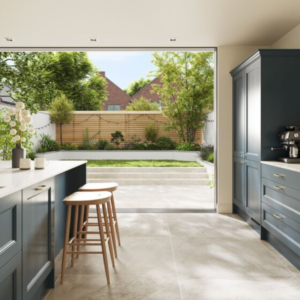
Yes, using matching or coordinating indoor and outdoor tiles can create a seamless transition between your home and garden. Choosing the same colour, finish and tile design helps connect adjoining spaces, while large-format tiles can reduce visible grout lines. The indoor and outdoor products may have slightly different finishes or thicknesses, so careful planning is essential. For further guidance, discover the latest blog about outdoor tiles here.
Porcelain indoor and outdoor tiles are generally easy to maintain because they are durable and resistant to moisture and staining. Sweep or brush away loose dirt regularly, then clean with warm water and a suitable pH-neutral tile cleaner. Outdoor tiles may need occasional deeper cleaning to remove algae, moss or weather-related marks. Avoid harsh products unless they are confirmed as suitable for the tile and grout.
Outdoor tiles can be installed using different methods depending on the product, ground conditions and location. Options may include installation onto a suitable concrete base, a prepared mortar bed or a pedestal system for certain porcelain paving products. The ground must be stable, level and properly drained, with appropriate falls to prevent water from collecting beneath or around the tiles.
Porcelain patio tiles are one of the most popular choices for outdoor areas because they are hard-wearing, weather-resistant and easy to clean. They are available in a wide range of designs, including natural stone-effect, slate-effect and concrete-effect finishes. Choose tiles that are frost-resistant, suitable for external use and compatible with the intended installation method.
Not sure which tile?
Email [email protected], Monday to Friday 9am to 4.30pm