Free UK delivery on orders over £299

Uncoupling membrane
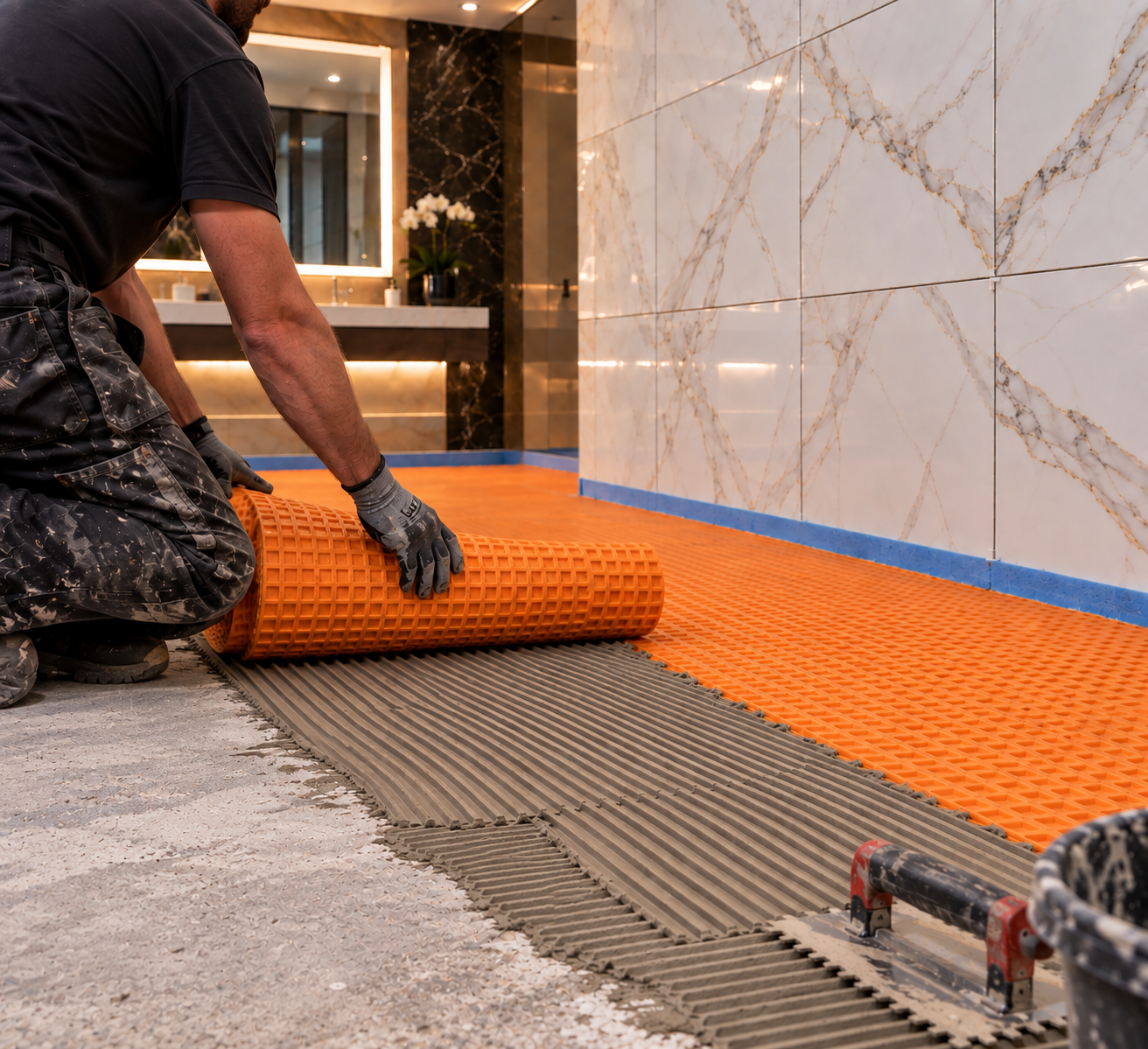
When it comes to tiling over problematic substrates, one of the most effective solutions is the use of uncoupling membranes. These membranes offer numerous advantages, particularly in scenarios where substrates might otherwise compromise the integrity and longevity of the tile installation such as underfloor heating.
What is an Uncoupling Membrane?
An uncoupling membrane is a specialised layer placed between a substrate and the tile covering. It serves as an intermediary layer that helps to manage stress between the substrate and the tiles. These membranes are typically made from materials like polyethylene and are designed in a way that allows for lateral movement, which can be crucial for preventing damage to the tile surface.
Why Use Uncoupling Membranes on Problematic Substrates?
Problematic substrates, such as concrete that may crack or wood that expands and contracts, pose significant challenges for tile installations. Here are some reasons to use uncoupling membranes:
Crack Prevention
: They help in preventing cracks from the substrate from transferring into the tile above.
Moisture Management
: Many uncoupling membranes also serve as moisture barriers, protecting tiles from substrate moisture.
Stress Absorption
: By allowing the substrate and tile to move independently, these membranes absorb stress and prevent buckling or breaking.
Thermal Movement
: They can accommodate thermal expansion and contraction, which is particularly useful in areas with extreme temperature fluctuations.
Tiling Over the Membrane
: Once the membrane is set, tiles can be laid directly on top of it using a thin-set mortar.
Benefits of Using Uncoupling Membranes
Utilising uncoupling membranes offers several advantages:
Increased Longevity
: They enhance the lifespan of tile installations by mitigating common substrate issues.
Versatility
: Suitable for a variety of substrates including concrete, plywood, and anhydrite screeds.
Ease of Installation
: They can be installed relatively quickly and easily with the right tools and techniques.
Improved Performance
: Tiles exhibit better performance in both residential and commercial settings when installed over uncoupling membranes.
When it comes to tiling over problematic substrates, one of the most effective solutions is the use of uncoupling membranes. These membranes offer numerous advantages, particularly in scenarios where substrates might otherwise compromise the integrity and longevity of the tile installation such as underfloor heating.
Showing all 2 resultsSorted by latest
Frequently Asked Questions
An uncoupling membrane is a thin, matting layer installed between your subfloor and tiles that absorbs movement and stress, preventing cracks from forming in your tile installation over time. It is particularly useful when tiling over problematic substrates such as timber floors, concrete with minor cracks, or any surface prone to slight movement. If your subfloor is not perfectly stable or you are concerned about long-term tile integrity, an uncoupling membrane is a smart investment.
Yes, uncoupling membranes are fully compatible with underfloor heating systems and are in fact one of the recommended solutions for such installations. The membrane helps to manage the thermal expansion and contraction that occurs as the heating system cycles on and off, reducing the risk of tiles cracking or debonding over time. Always check the specific membrane product specifications to confirm compatibility with your particular underfloor heating setup before purchasing.
Uncoupling membranes are suitable for use with a wide range of tile types, including ceramic, porcelain, natural stone, and large-format tiles. They are especially beneficial when laying heavy or rigid tiles over substrates that carry a risk of movement, as the membrane decouples the tile layer from the subfloor. If you are unsure whether your chosen tile is compatible, our team at Stoke Tiles is happy to advise before you order.
To calculate the amount of uncoupling membrane required, simply measure the total square metreage of the area you intend to tile, then add around 10% to account for cuts and wastage around edges, doorways, and obstacles. Membranes are typically sold in rolls of varying widths and lengths, so it is worth checking the roll dimensions on the product listing to work out the most efficient quantity to order. If you need help with your calculation, feel free to contact Stoke Tiles before placing your order.
Uncoupling membranes are designed to be straightforward to install and are suitable for confident DIY tilers as well as professionals. The membrane is typically cut to size with a utility knife and bedded into a layer of tile adhesive using a notched trowel, before tiles are then fixed on top. Following the manufacturer’s installation guidelines carefully will ensure the membrane performs as intended and protects your tiled surface for years to come.