
It’s one of the most common questions in home renovation – should I go for tiles or vinyl? Both are popular flooring choices for kitchens, bathrooms, hallways and utility rooms, and both have genuine advantages. This blog gives you an honest, side-by-side comparison so you can make the right choice for your home, your budget, and your lifestyle. Stoke Tiles is a supplier of both porcelain tiles and luxury vinyl flooring, we understand the benefits of each. Our comparison is designed to offer honest, impartial advice, helping you make an informed decision about the best flooring for your home.
The Quick Answer
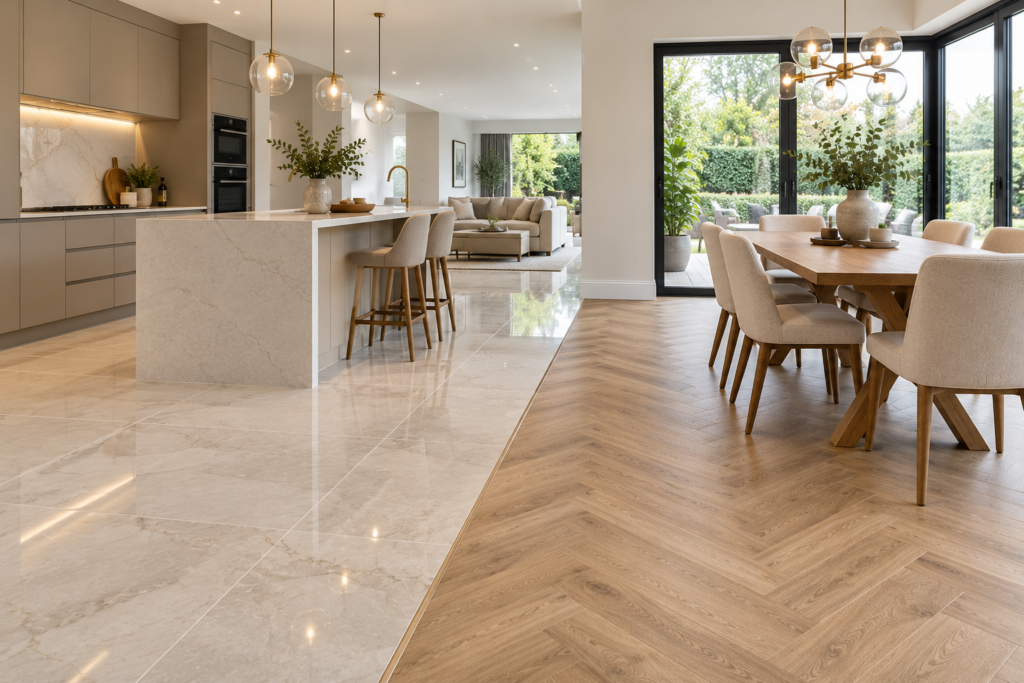
Tiles are generally the stronger long-term choice if you want maximum durability, long-term value and a premium look that can last for decades. They are often the best flooring for bathrooms and en-suites because they can handle moisture well when correctly specified and installed. Vinyl is a strong option for the lowest upfront cost and easier DIY installation, especially if you are comfortable replacing the floor after around 10–15 years. Both can work well as kitchen flooring and hallway flooring; your choice should come down to budget, underfloor heating plans and how long you expect to stay in the property.
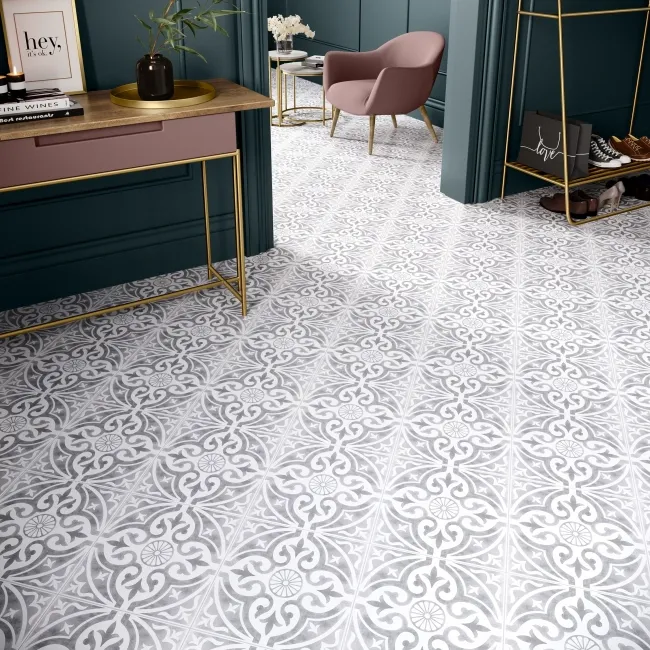
Appearance and Design Choice
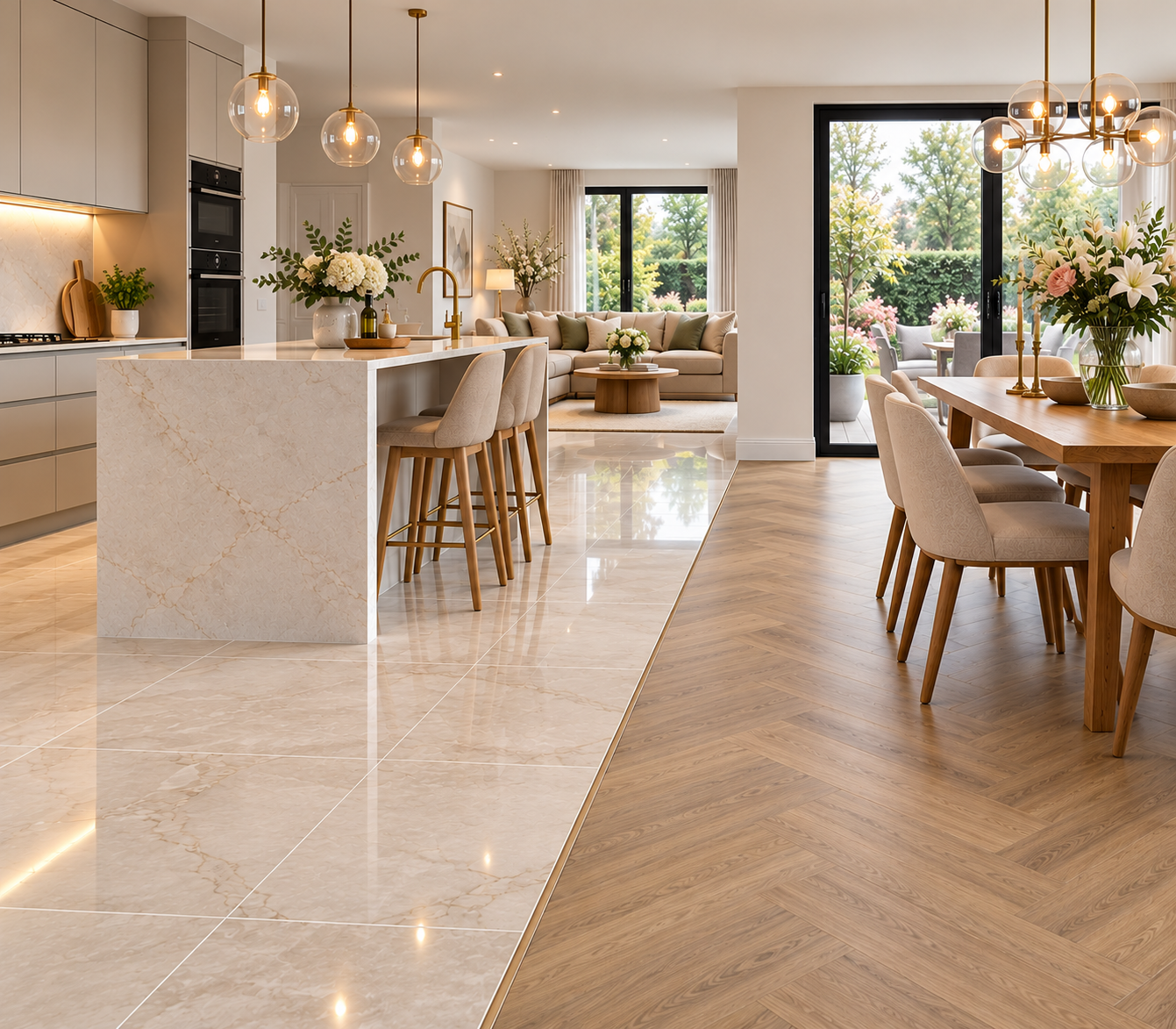
Tiles offer a broad design palette. You can choose from different colours, shapes, sizes, laying patterns and surface effects, including stone-effect tiles, marble tiles, terrazzo effect tiles, concrete effect tiles and wood-effect tiles. That flexibility makes it easier to create anything from a calm, minimalist bathroom to a characterful kitchen floor.
Vinyl has also moved well beyond plain sheet flooring. Luxury vinyl tiles and planks can reproduce timber, stone and patterned finishes with convincing detail, while sheet vinyl can provide a continuous look with fewer visible joints. It is a practical way to introduce colour or pattern without committing to a more involved tile installation.
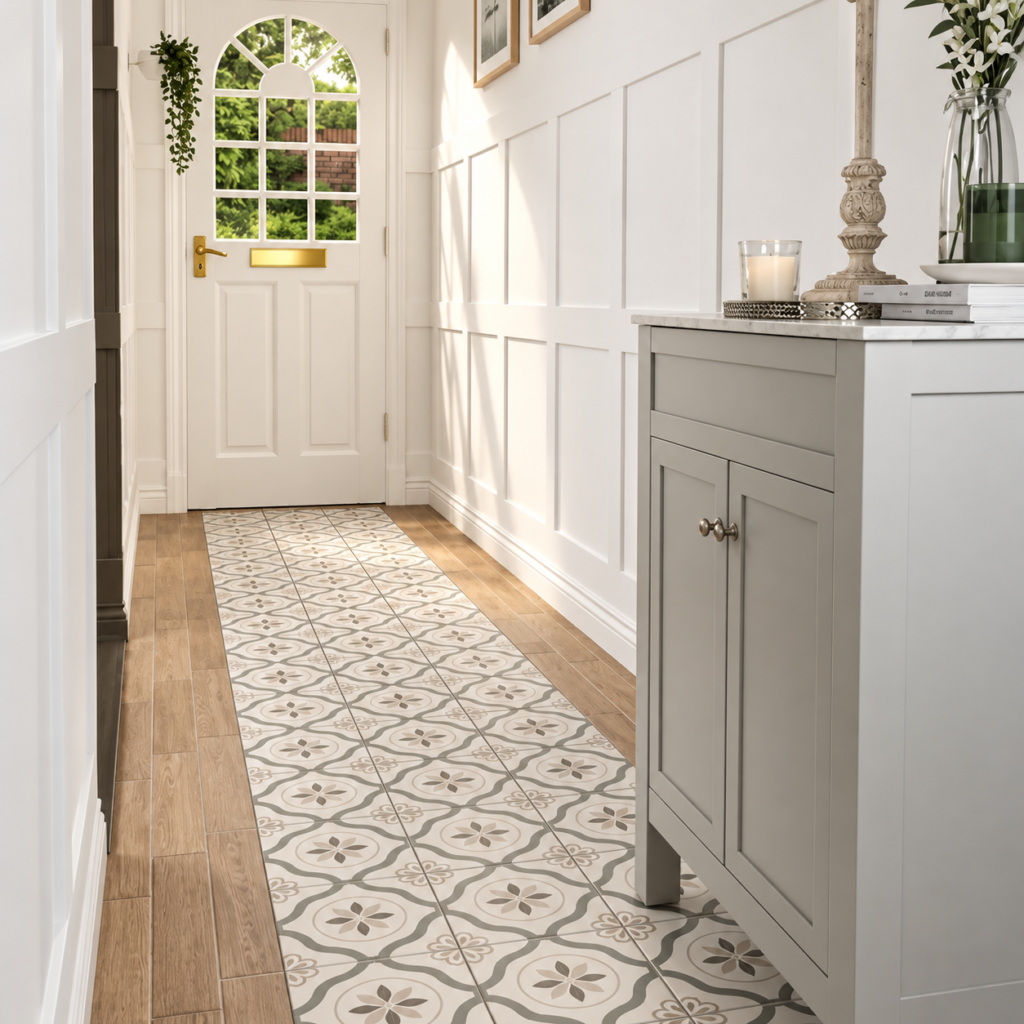
Cost - Upfront Vs. Long Term
Vinyl is generally more budget-friendly at the outset and can reduce installation time and disruption. That makes it attractive for a quick refresh, a rental property or a project where the initial budget is tightly controlled. The overall cost still depends on the product, subfloor preparation, trims, adhesive and fitting.
Tiles can require a higher upfront investment, particularly when the floor needs substantial preparation or a more involved laying pattern. However, their exceptional durability and premium finish may make them strong long-term value in a busy, permanent home. Think beyond the purchase price and consider how long you expect the floor to last.
Which Flooring Offers Better Value Over Time?
Tiles may cost more initially, but they can work out cheaper in the long run, as they can last 3-5 times longer.
For example:
- Tiles: £40 per m² lasting 40 years = just £1 per m² per year.
- Vinyl Flooring: £25 per m² lasting 12 years = £2.08 per m² per year.
The bottom line: Although tiles cost more upfront, their longer lifespan could make them better value over time, costing less than half as much per year compared with vinyl flooring.

Maintenance
Both tiles and vinyl flooring are low-maintenance options that are easy to clean with regular sweeping and mopping, without the need for specialist cleaning products in most cases. Discover our latest guide on How to Clean Porcelain Tiles here.
Porcelain floor tiles offer excellent durability and stain resistance, making them a practical choice for busy households, kitchens and bathrooms. Unlike vinyl flooring, which can become stained, porcelain tiles are highly resistant to everyday spills, food stains and pet accidents. Porcelain tiles are also an excellent choice for underfloor heating, as they conduct and retain heat efficiently without the risk of warping or delamination. While some vinyl flooring is compatible with underfloor heating, temperature restrictions often apply. Another advantage of tiled flooring is that individual damaged tiles can usually be replaced without disturbing the entire floor, whereas repairing vinyl may require replacing a larger section. The main maintenance consideration with tiles is keeping grout lines clean, particularly with lighter grout colours. Vinyl flooring has the advantage here, as it has no grout lines to maintain.
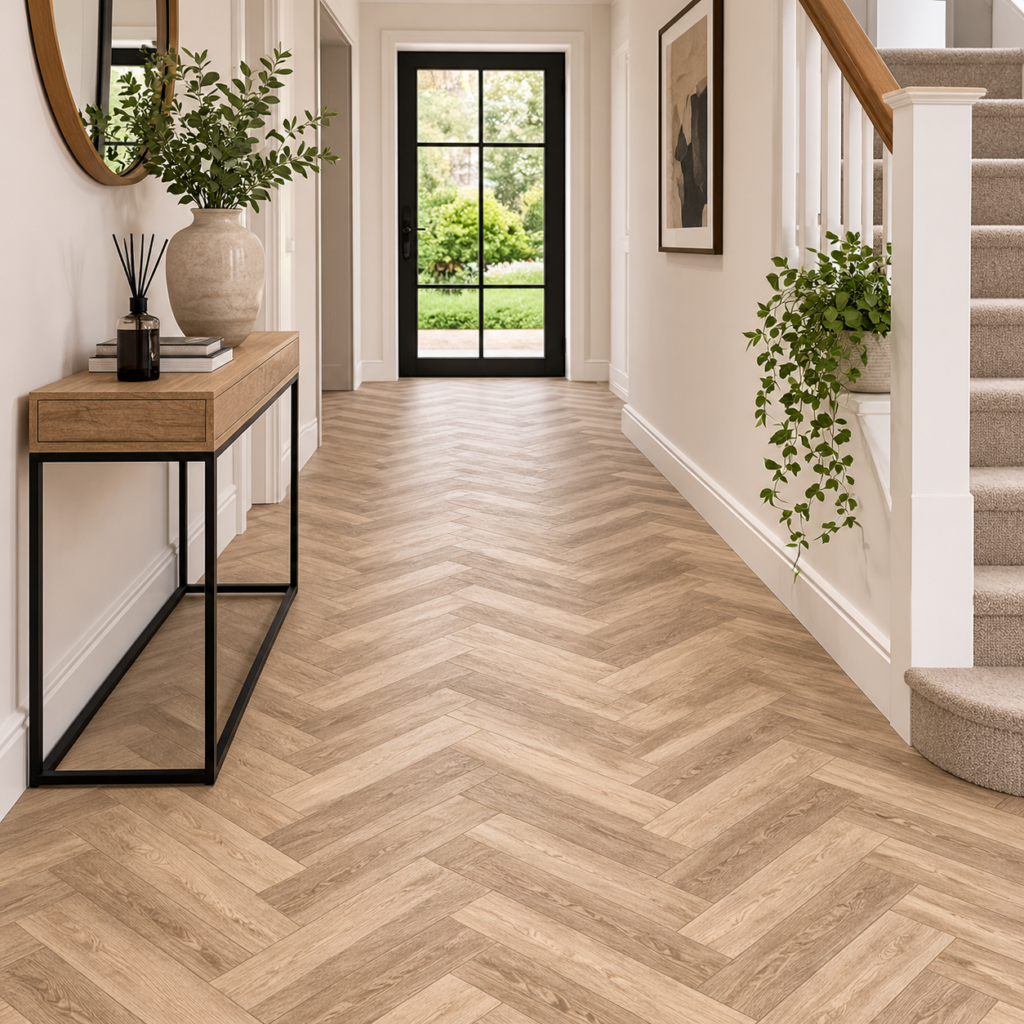
Installation
Tile installation normally involves careful subfloor preparation, accurate setting out, cutting, adhesive, grouting and drying time. The result can be excellent, but the process is less forgiving of uneven surfaces or rushed workmanship. Looking for a tile fitter? Stoke Tiles offers a professional installation service, discover more here.
Vinyl is often quicker to install and can create less disruption, but it still needs a suitable, clean and sufficiently smooth subfloor. Imperfections may show through thinner products, so a fast installation is not a substitute for good preparation.
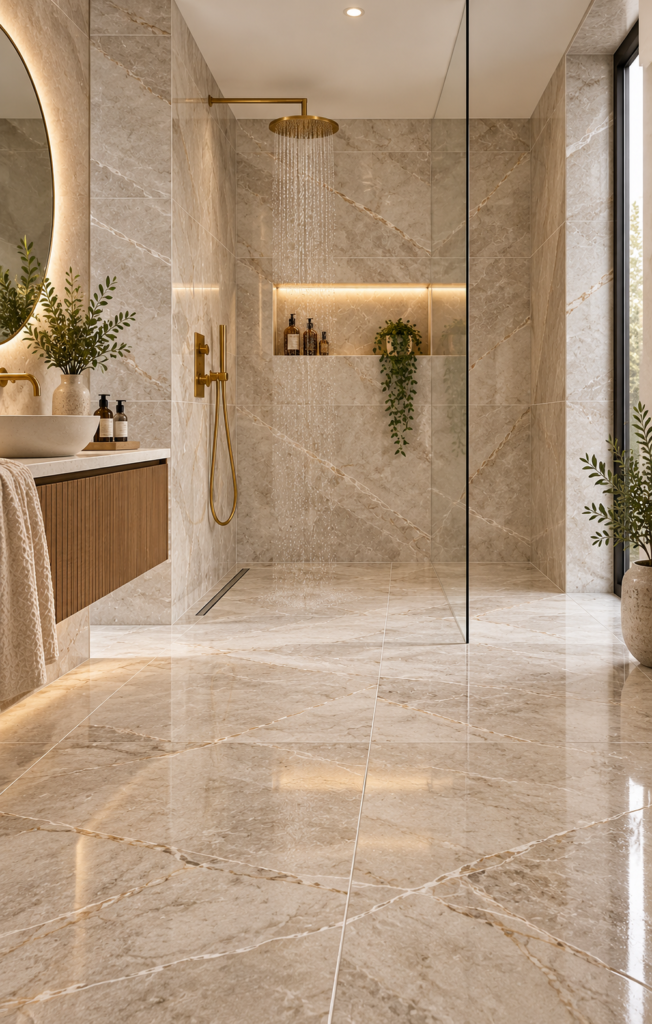
Tiles vs Vinyl Flooring: Which Is Best for Each Room in Your Home?
When choosing between floor tiles and vinyl flooring, it’s important to consider which option best suits each room in your home.
For bathrooms and wet rooms, porcelain floor tiles are an excellent choice thanks to their durability, water resistance and ability to withstand everyday moisture when correctly installed and waterproofed. While waterproof vinyl flooring can also be suitable for bathrooms, tiles offer a particularly robust, long-lasting solution.
In kitchens, both flooring options have their advantages. Porcelain kitchen floor tiles provide outstanding durability, heat resistance and easy maintenance, making them ideal for busy family kitchens, while vinyl flooring offers a softer, warmer feel underfoot and can be easier to install yourself. For hallways and entrance areas, hard-wearing porcelain tiles are particularly well suited to heavy foot traffic, muddy shoes and everyday wear, whereas vinyl can be a more budget-friendly alternative in quieter areas.
In living rooms and bedrooms, vinyl flooring and carpet remain popular choices for their comfort and warmth, although porcelain floor tiles are becoming increasingly popular in modern homes, especially when paired with underfloor heating for year-round comfort.
For utility rooms, laundry rooms and boot rooms, porcelain floor tiles are a practical choice, offering excellent resistance to water, dirt, scratches and heavy everyday use. Read our latest practical guide about Utility Floor Tiles here.
Ultimately, while both materials have their benefits, porcelain wall and floor tiles offer an attractive combination of style, strength and long-term value, making them a versatile flooring solution for almost every room in your home.

The Verdict
Both porcelain tiles and vinyl flooring have their place in modern homes, and neither is necessarily the right choice for every room. If you’re renovating with the long term in mind, porcelain floor tiles offer excellent value for money, combining lasting durability, timeless style and a high-quality finish that can look beautiful for decades. While the initial investment may be higher, their resistance to everyday wear and relatively low maintenance needs make them a practical option for homeowners seeking a flooring solution that stands the test of time. Alternatively, vinyl flooring is a sensible choice for budget-conscious renovations, particularly in spaces where comfort, affordability and straightforward installation are priorities. Ultimately, choosing between tiles and vinyl flooring comes down to what matters most to you: initial cost, comfort, appearance, durability or long-term value. By considering how each room is used and how long you want your flooring to last, you can make an informed decision that suits both your home and your budget.
Frequently Asked Questions
Is vinyl flooring better than tiles?
Both have their advantages, but porcelain floor tiles are generally better for durability, longevity and water resistance, making them ideal for busy households. Vinyl flooring is a more affordable option that offers greater comfort underfoot and easier installation.
How long does vinyl flooring last compared to tiles?
Vinyl flooring typically lasts between 10 and 20 years, depending on quality and maintenance, while porcelain floor tiles can last 30–50 years or longer when properly installed and maintained. This makes tiles an excellent long-term flooring investment.
Are tiles more expensive than vinyl?
Porcelain tiles generally cost more upfront than vinyl flooring, particularly when professional installation is included. However, their longer lifespan and durability can make tiles more cost-effective over time.
Can you put vinyl over tiles?
Yes, vinyl flooring can often be installed over existing floor tiles, provided the surface is level, stable, clean and dry. Grout lines or uneven tiles may need smoothing first to prevent imperfections showing through the vinyl.
Which is better for a kitchen – tiles or vinyl?
Porcelain kitchen floor tiles are an excellent choice for their durability, water resistance, heat resistance and easy cleaning. Vinyl flooring is also suitable for kitchens, offering a softer, warmer feel underfoot at a lower initial cost.
Do tiles increase property value more than vinyl?
High-quality porcelain floor tiles can add to a property’s appeal and potentially its resale value, particularly in kitchens, bathrooms and hallways. While vinyl flooring can also improve a home’s appearance, premium tiled flooring is often viewed as a more durable, long-term feature by prospective buyers.