
Few materials have the enduring appeal of marble. Elegant, distinctive and effortlessly luxurious, marble has been used in architecture and interiors for centuries—and it continues to feel just as relevant in contemporary homes today. From softly veined white marble to dramatic darker tones, marble tiles can completely transform a bathroom, kitchen, hallway or living space. Whether you’re considering natural marble or marble-effect porcelain tiles, there are options to suit both traditional and modern interiors. At Stoke Tiles, we believe the secret is choosing a marble style that complements your space rather than overwhelms it.

Why Choose Marble Tiles?
The attraction of marble is largely in its character. Rather than relying on bold colours or complicated patterns, marble creates visual interest through subtle variations in tone and veining. This makes it particularly effective in interiors where you want to create a sense of luxury without making the room feel overly decorated. Marble-style tiles also work beautifully alongside other materials. Pair them with warm timber for a softer, more natural interior, brushed brass or gold details for understated luxury, or matt black fittings for a sharper contemporary finish. Most importantly, marble is remarkably versatile. It can feel classical, minimalist, Mediterranean, contemporary or boutique-hotel inspired depending on how you use it.
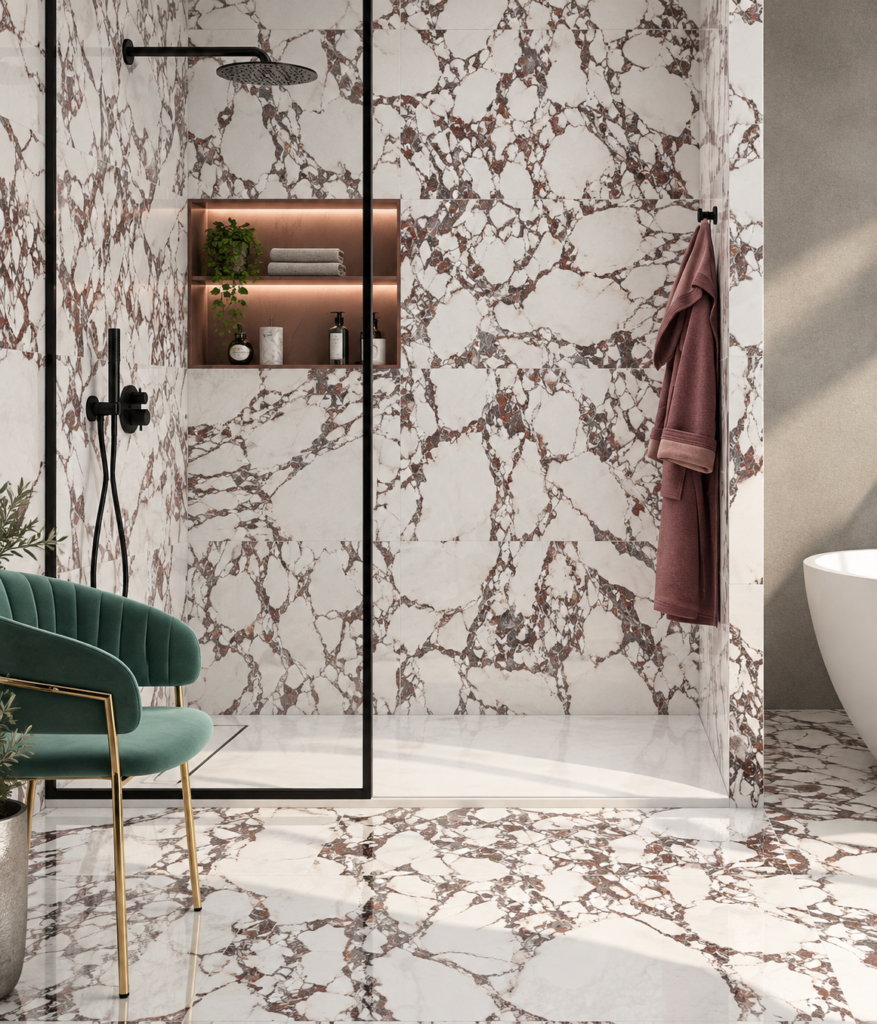
Natural Marble or Marble-Effect Porcelain?
One of the first decisions to make is whether you want natural marble or the appearance of marble recreated in porcelain.
Natural marble
Every piece of natural marble is unique. Variations in colour, veining and pattern are inherent to the stone and are a large part of its appeal. However, natural marble requires more consideration when it comes to installation and maintenance. As a natural stone, it can be porous and may require appropriate sealing and ongoing care depending on the particular marble and where it is installed.
Marble-effect porcelain
Modern porcelain offers another approach. High-quality marble-effect porcelain can reproduce the veining, colour variation and character associated with natural marble while offering many of the practical advantages of porcelain. It’s particularly attractive for busy bathrooms, kitchens and floors where homeowners want the marble aesthetic with relatively straightforward maintenance. This makes marble-effect porcelain one of the most versatile choices for creating a luxurious interior without necessarily using natural stone throughout the room.

Marble Effect Bathroom Tiles
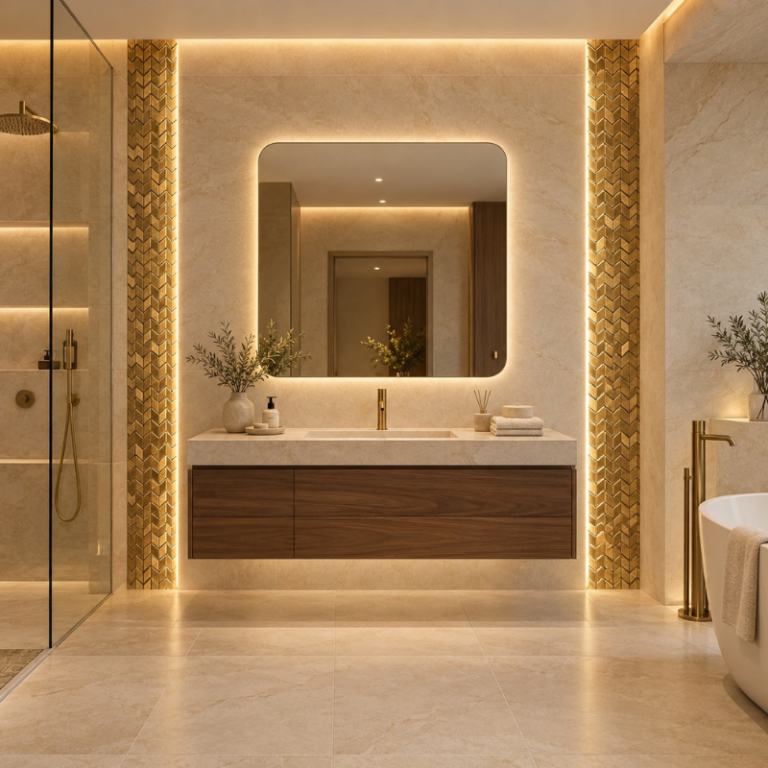
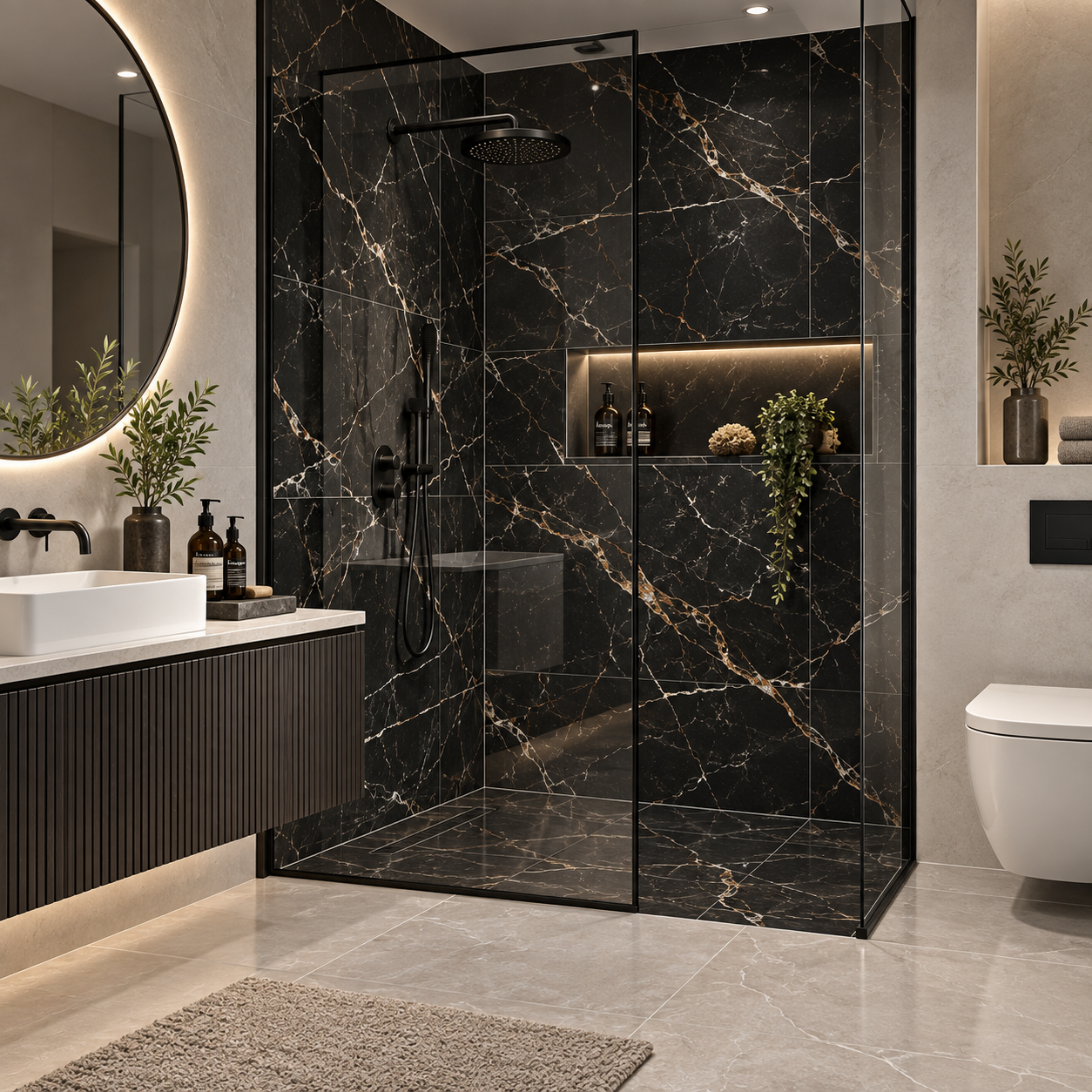
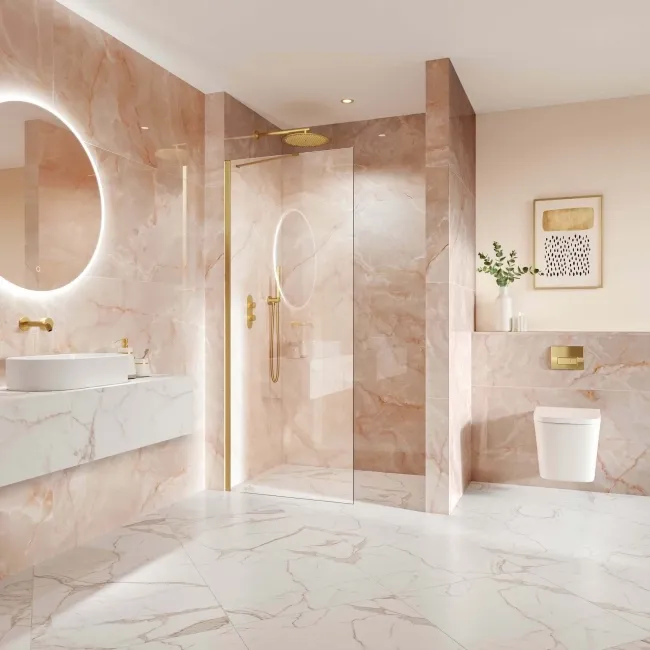
Bathrooms and marble effect tiles work beautifully together, light marble inspired tiles can make a bathroom feel brighter and more spacious, while distinctive veining prevents an all-neutral room from feeling plain. For a clean, contemporary bathroom, consider using large-format marble-effect tiles across both walls and floors. Reducing the number of grout lines can create a calmer, more continuous appearance. For something warmer, combine white or cream marble with oak furniture, warm lighting and brushed brass fittings. Alternatively, contrast pale marble with matt black taps, shower screens and accessories for a more architectural look. You don’t necessarily need marble everywhere, either. A marble feature wall behind a freestanding bath or vanity can become the focal point while quieter tiles are used elsewhere.

Marble Effect Kitchen Tiles
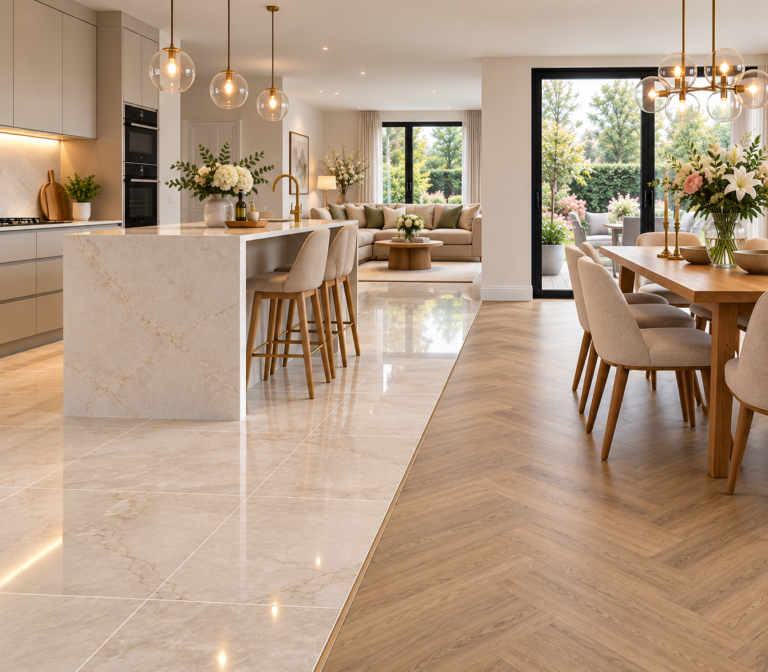
Marble effect tiles work equally well in kitchens. A marble-effect tiled floor can provide a sophisticated foundation for everything from traditional painted cabinetry to minimalist contemporary kitchens. Marble effect wall tiles can also make an attractive splash back, particularly when their veining complements the worktop and cabinetry. Consider the overall colour temperature of the kitchen. Cool white marble with grey veining can work beautifully with charcoal, navy and crisp white cabinetry. Warmer ivory, beige and gold-veined designs tend to pair naturally with cream, taupe, olive green and timber. The result doesn’t have to feel formal. Combining marble with natural wood, textured ceramics and softer colours can create a much more relaxed interpretation.
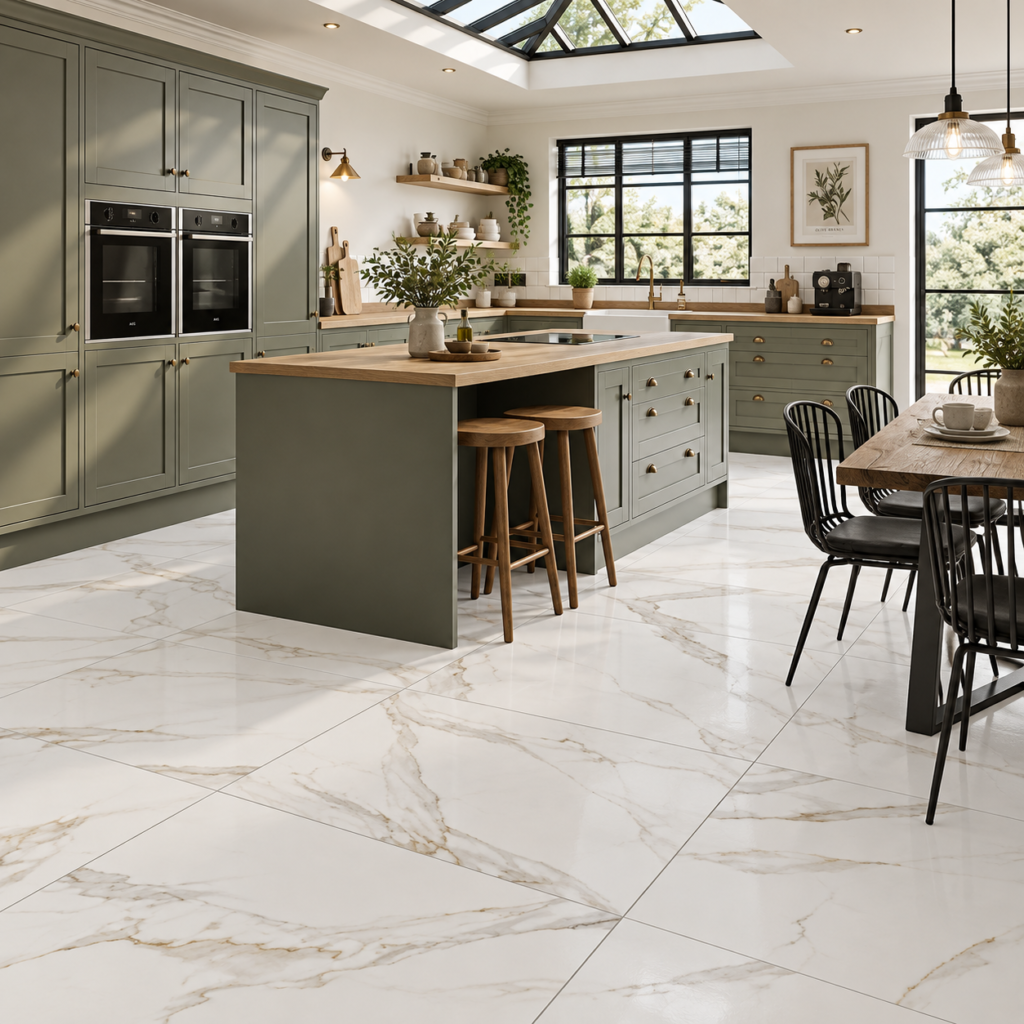
The Beauty of Large-Format Marble Tiles
Large-format tiles are particularly effective with marble designs. Larger surfaces allow the veining to become a more prominent part of the interior while reducing the visual interruption created by grout lines.
They can work particularly well in:
- Walk-in showers
- Feature bathroom walls
- Open-plan kitchens
- Hallways
- Large floors
- Contemporary living spaces
Discover our latest guide to large format tiles here.

Choosing the Right Colour Marble Effect Tile
White isn’t your only option.
White and grey creates a clean, timeless appearance and is particularly versatile.
Cream and beige introduces additional warmth and pairs beautifully with timber and neutral interiors.
Gold-veined can create a more luxurious look, particularly when combined with brass or bronze details.
Green makes a much stronger design statement and works particularly well as a feature surface.
Black can create an intimate, dramatic interior and looks especially striking when contrasted with lighter cabinetry or metallic fittings.
Your choice should ultimately complement the room rather than simply follow the latest trend.
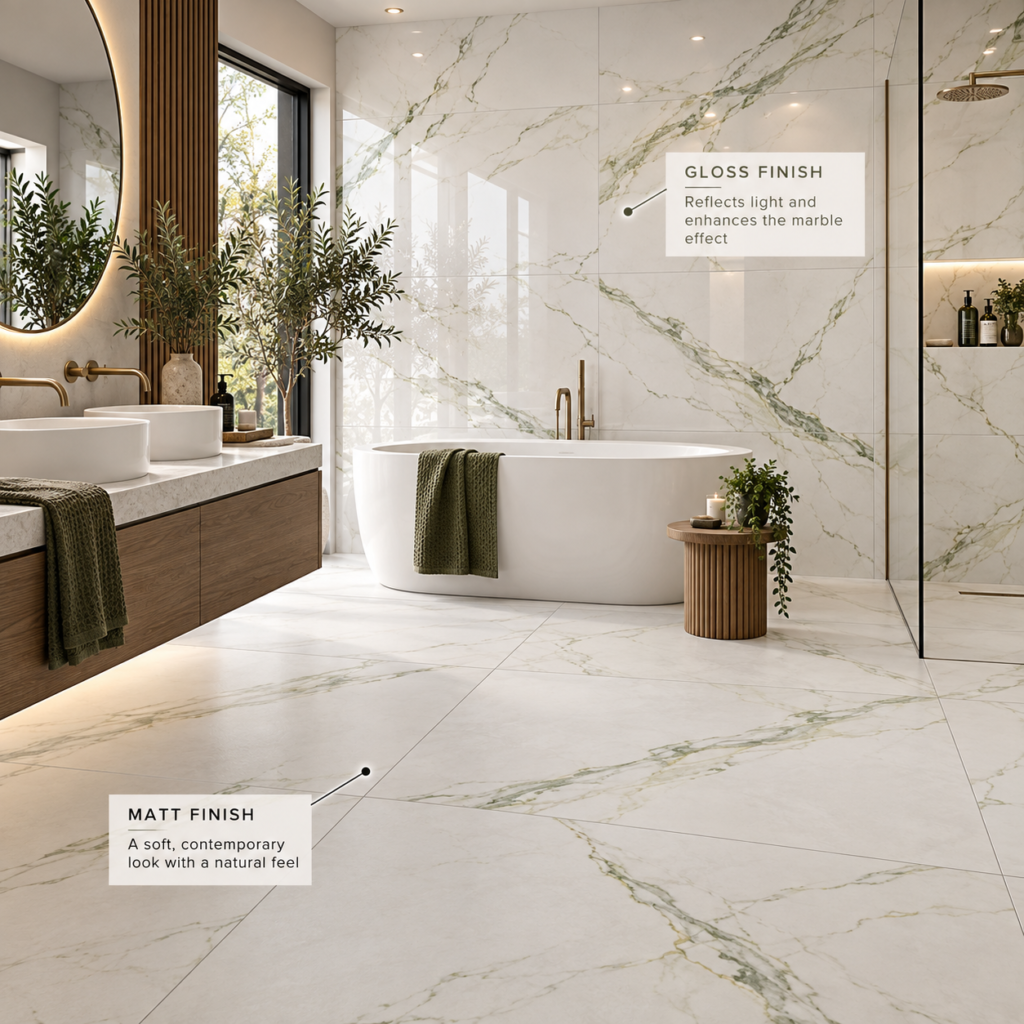
Matt or Polished Tiles?
The finish can dramatically alter the character of a marble effect tile.
A polished finish reflects more light and emphasises the depth and veining of a marble design. It can create a particularly luxurious appearance on walls and appropriate interior surfaces.
A matt finish tends to feel softer and more understated. It can work particularly well in contemporary interiors where you want the character of marble without a highly reflective surface.
For flooring and wet areas, aesthetics shouldn’t be the only consideration. Always check that the specific tile’s technical characteristics and slip-resistance rating are appropriate for where you intend to install it.
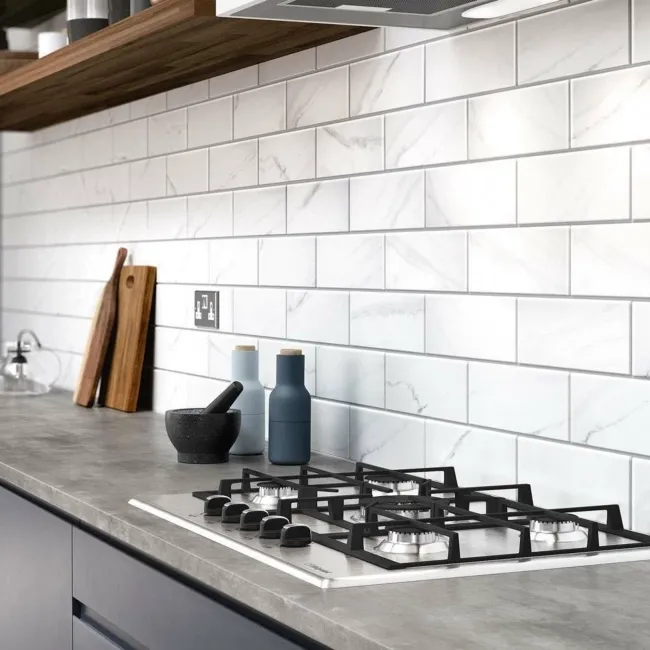
What Colour Grout Works Well With Marble Effect Tiles?
Grout can make a surprisingly large difference to the finished room.
If you want the tiled surface to appear continuous, select a grout colour reasonably close to the background colour of the marble effect tile.
Contrasting grout makes the shape of every tile much more visible. That can be intentional, particularly with smaller-format tiles, but with large marble effect tiles a subtler grout colour often allows the veining to remain the main feature.

Are Marble Effect Tiles Right for Your Home?
If you’re looking for a surface that can make an interior feel considered, elegant and timeless, marble effect tiles are difficult to overlook.
Marble-effect porcelain provides an attractive alternative for homeowners looking for the marble aesthetic alongside the practical characteristics of porcelain.
The most successful marble interiors aren’t necessarily the most extravagant. Often, they’re the simplest—beautiful veining, carefully selected colours and a handful of complementary materials.
Frequently Asked Questions About Marble-Effect Tiles
What are marble-effect tiles?
Marble-effect tiles are designed to recreate the elegant appearance and natural veining of real marble. They are typically made from porcelain or ceramic, offering the luxurious look of marble with practical benefits such as durability and easier maintenance.
Are marble-effect tiles easier to maintain than real marble?
Generally, yes. Porcelain marble-effect tiles are non-porous and usually don’t require the regular sealing associated with natural marble. Everyday cleaning is also straightforward, making them particularly suitable for busy homes.
Can marble-effect tiles be used in bathrooms and showers?
Yes. Many marble-effect porcelain tiles are suitable for bathroom walls and floors, including shower areas. For floors and wet areas, always check the specific tile’s suitability and slip-resistance rating before purchasing.
Do marble-effect tiles look realistic?
Modern manufacturing and printing techniques can produce remarkably realistic variations in veining, colour and pattern. Choosing a range with multiple different tile faces helps create a more natural appearance and reduces obvious repetition.
What colours work well with marble-effect tiles?
Marble-effect tiles are extremely versatile. White and grey marble effects pair beautifully with black, charcoal and chrome, while warmer marble designs work particularly well with oak, beige, olive green and brushed brass or gold accents.