
If you’ve been shopping for tiles online, you may have come across the term ‘rectified tiles’ and wondered what it actually means. While it’s a common phrase in the tiling industry, it’s not always clearly explained.
In this simple guide, we’ll explain what rectified tiles are, how they’re made, and what makes them different from standard tiles. We’ll also explore their benefits and help you decide whether they’re the right choice for your bathroom, kitchen or flooring project.
What Does Rectified Mean?
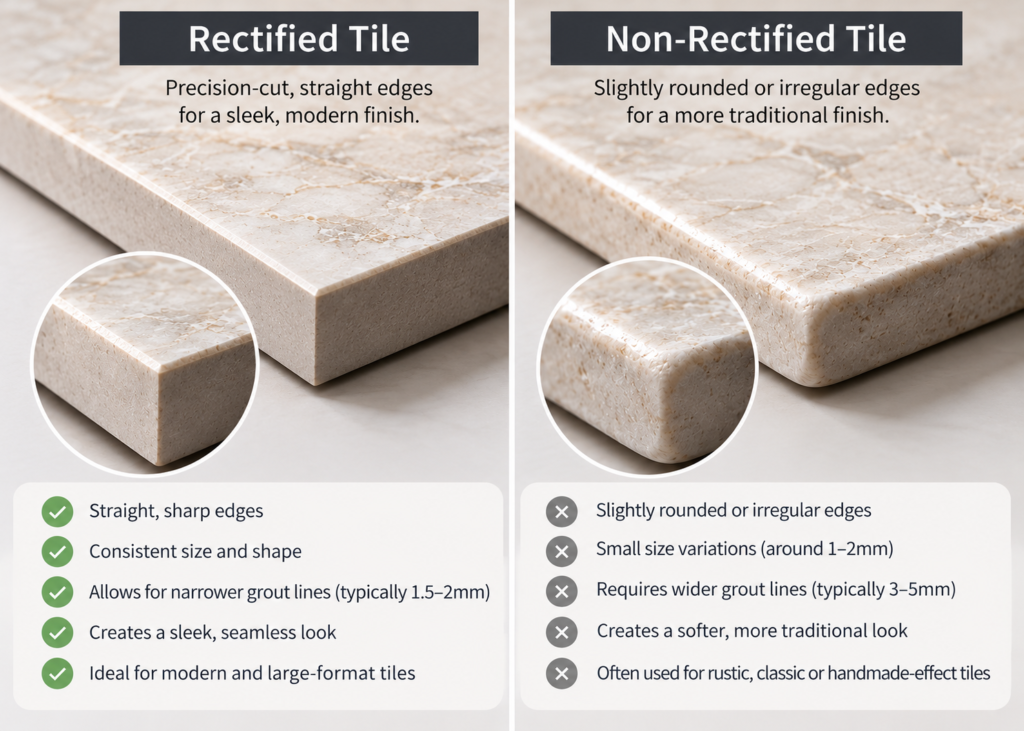
Rectified tiles are tiles that have been precisely cut after manufacturing to create straight, even edges and a consistent size. This additional process gives them a clean, sharp appearance, making them particularly popular for modern bathrooms, kitchens and flooring projects.
During manufacturing, tiles are fired at extremely high temperatures, which causes them to shrink slightly. Because each tile can shrink differently, standard non-rectified tiles may have small variations in size, sometimes around 1–2mm.
Rectified tiles undergo an extra manufacturing process after firing, where their edges are carefully cut or ground using specialist machinery. This ensures the tiles have highly consistent dimensions and precise 90-degree edges, allowing them to be installed with narrower, more uniform grout joints.
The easiest way to understand the difference is to imagine slicing a loaf of bread. Non-rectified tiles are like hand-cut slices, where each piece may vary slightly in size. Rectified tiles are like machine-cut slices, with neat, consistent edges that line up beautifully.
The result is a sleek, seamless-looking tiled finish with minimal visible grout lines, ideal for creating a contemporary and spacious feel in your home.

Rectified vs Non-Rectified Tiles – What's the Difference?
The main differences between rectified and non-rectified tiles are their edges, grout lines, appearance, size consistency and cost.
1. Edge Finish
Rectified tiles have precision-cut, straight edges for a sharp, modern finish. Non-rectified tiles have slightly rounded or softer edges, creating a more traditional look.
2. Grout Line Width
Rectified tiles allow for narrower grout joints, typically 1.5–2mm, while non-rectified tiles generally require 3–5mm to accommodate size variations.
3. Overall Appearance
Rectified tiles create a sleek, seamless-looking finish, particularly with large-format porcelain tiles. Non-rectified tiles offer a softer, more rustic or traditional appearance.
4. Size Consistency
Non-rectified tiles may vary in size by around 1–2mm, while rectified tiles are precision-cut for greater consistency, often with variations below 0.5mm.
5. Cost Difference
Rectified tiles can cost slightly more due to the additional cutting process, sometimes around 10–20% more. However, many mid-range and premium porcelain tiles now feature rectified edges as standard.

When Do Rectified Tiles Matter Most?
Rectified tiles are ideal for achieving a sleek, modern finish with narrow grout lines. Here are five situations where choosing rectified tiles can make the biggest difference.
1. Large-Format Tiles
Rectified tiles are highly recommended for large-format tiles, particularly sizes of 600 x 600mm and above. Their precise edges ensure consistent sizing, helping create straight, even grout lines and a professional finish. Read more about Large format Tiles here.
2. Modern and Minimalist Interiors
For a clean, contemporary look with minimal visible grout lines, rectified tiles are an excellent choice. Their precision-cut edges create a smooth, seamless-looking finish, perfect for modern bathrooms, kitchens and living spaces.
3. Matching Wall and Floor Tiles
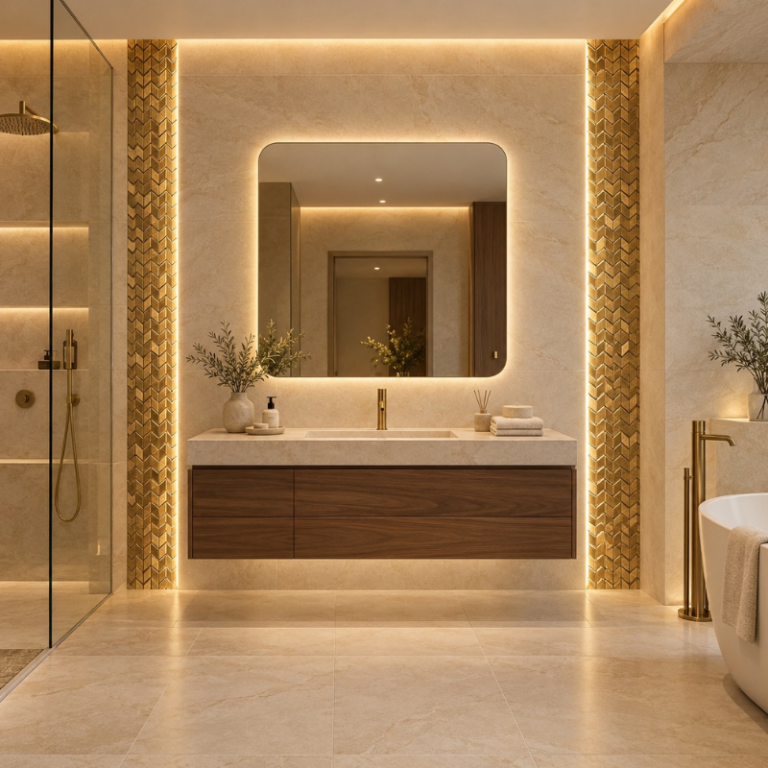
Using the same tiles on walls and floors creates a beautifully coordinated appearance. Rectified tiles make it easier to align grout lines, helping achieve a continuous, spacious feel, particularly in bathrooms.
4. Open-Plan Living Spaces
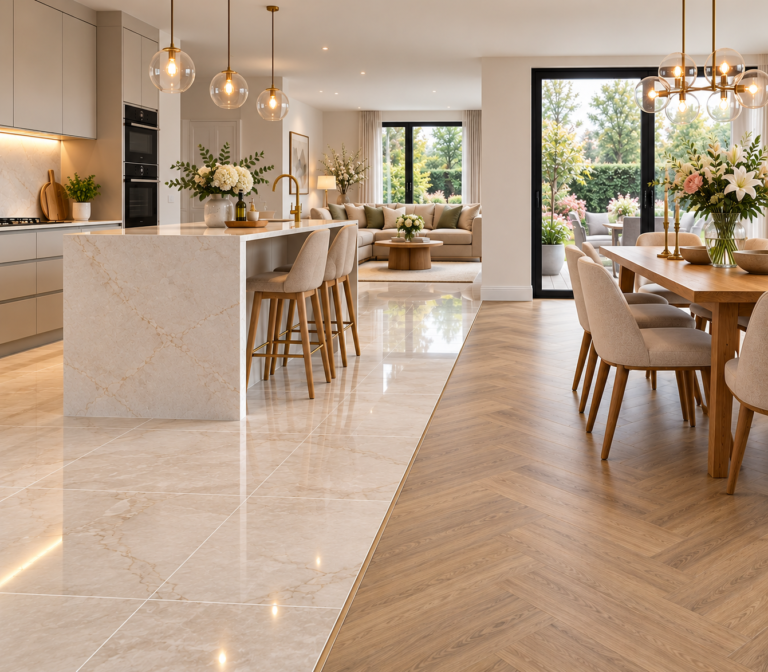
Large, open-plan areas benefit from the seamless appearance of rectified tiles. Their narrow grout joints help create a more continuous surface, making kitchens, dining rooms and living areas feel larger and more connected.
5. When Are Non-Rectified Tiles Better?
Rectified edges are less important for small mosaics, rustic or handmade-effect tiles, where slightly irregular edges add character. They’re also less essential for outdoor paving installations that require wider joints.

Installation Tips for Rectified Tiles
Rectified tiles create a sleek, professional finish, but careful installation is essential, particularly when using large-format porcelain tiles.
1. Always Leave Grout Joints
Never install rectified tiles without grout. A minimum joint of around 1.5–2mm is typically recommended to accommodate slight movement and temperature changes. Always follow the manufacturer’s guidance.
2. Use a High-Quality Flexible Adhesive
Choose a suitable flexible tile adhesive to ensure a strong, reliable bond. Narrow grout joints make installation imperfections more noticeable, so using the correct adhesive is important.
3. Prepare a Flat, Even Surface
A flat, properly prepared surface is essential. Even small bumps or dips can affect the finished appearance, particularly with large-format rectified tiles.
4. Use Tile Levelling Clips
For larger tiles, levelling clips and spacers help keep adjoining tiles aligned and reduce lippage, where one tile edge sits higher than the next.
5. Choose an Experienced Tiler
For the best results, consider a professional tiler experienced in installing large-format rectified tiles. They’ll understand the preparation, spacing and installation techniques needed for a flawless-looking finish. Did you know, Stoke Tiles offers an installation service with tilers who have over 25 years experience. Discover more about our installation service here.
Frequently Asked Questions About Rectified Tiles
1. What does rectified mean in tiles?
Rectified tiles are precision-cut after firing to create straight, sharp edges and consistent dimensions. This allows for narrower grout lines and a clean, modern finish.
2. Is rectified better than non-rectified?
Rectified tiles are ideal for modern interiors and large-format installations, offering a sleek appearance with minimal visible grout. Non-rectified tiles are better suited to rustic, traditional or handmade-effect designs.
3. Can rectified tiles be laid with no grout?
No, rectified tiles should never be installed without grout joints. Small gaps are essential to accommodate movement and help prevent damage or cracking.
4. Do rectified tiles cost more?
Rectified tiles can cost slightly more due to the additional precision-cutting process. However, many mid-range and premium porcelain tile collections now feature rectified edges as standard.
5. What grout spacing is recommended for rectified tiles?
Grout joints of around 1.5–2mm are commonly used for rectified tiles, depending on the installation. Always follow the tile manufacturer’s recommendations and relevant tiling standards.
6. Are all porcelain tiles rectified?
No, not all porcelain tiles are rectified. Porcelain tiles are available with both rectified and non-rectified edges. Always check the product specifications before purchasing.
7. Are rectified tiles harder to cut?
Slightly – the precision edges mean any cut needs to be clean and accurate. A wet tile cutter gives the best results. Snap cutters can chip the sharp edges.
8. Are rectified tiles more fragile?
The edges are slightly more prone to chipping during handling and installation because they’re sharper.
9. Can I mix rectified and non-rectified tiles?
Not recommended – the size differences and edge profiles will be visible and grout lines won’t match
10. Do rectified tiles need sealing?
That depends on the material (porcelain or ceramic), not whether they’re rectified. Most porcelain tiles (rectified or not) don’t need sealing