
Your front porch is where first impressions start. It is the transition between outside and inside, and the right tiles can turn a small, functional space into a design feature that sets the tone for your entire home. But porches are also one of the most demanding environments for tiles – exposed to rain, frost, mud and heavy foot traffic. Getting the tile choice right means balancing style with practicality.
Porch tiles need to perform under pressure. They must be durable enough to handle constant use, resistant to moisture and temperature changes, and safe to walk on in all weather conditions. At the same time, they should complement the home’s exterior and create a welcoming first impression.
At Stoke Tiles, the focus is on helping homeowners make confident, informed choices. With expert knowledge of materials, finishes and performance ratings, the right advice ensures the porch looks great and lasts for years.

What Makes a Good Porch Tile?
Before exploring styles and finishes, it’s important to understand the practical requirements that make a tile suitable for a porch. This space faces constant wear and exposure, so performance should always come first.
Anti-Slip – A porch floor will inevitably get wet, so slip resistance is essential. Choose tiles with a matt or textured finish and an appropriate slip rating of R10 or R11 to ensure safety underfoot. Avoid polished tiles, as their smooth surface becomes slippery when wet.
Frost Resistance – If the porch is open or partially exposed, tiles must be frost-proof to prevent cracking in cold weather. Porcelain tiles are naturally frost-resistant, making them ideal for outdoor and transitional spaces.
Durability – Porches experience heavy use from foot traffic, pushchairs, bikes and deliveries. Porcelain tiles are the most hardwearing option, offering exceptional strength and resistance to wear and impact.
Low Maintenance – Porches collect dirt and debris from outside, so easy maintenance is key. Porcelain tiles are non-porous, meaning they resist stains and can be cleaned easily with just a mop and water—no sealing or specialist products required.
Internal and External Suitability – Many porches are semi-enclosed, bridging the gap between indoors and outdoors. Look for tiles rated for both internal and external use to create a seamless flow from the porch step into the hallway. This continuity enhances the sense of space and gives the entrance a cohesive, well-designed look. Stoke Tiles offers a wide selection of porcelain tiles suitable for both settings.
Porch Tile Styles – From Victorian to Contemporary
Once the practical requirements are covered, the next step is choosing a style that complements the property. From traditional period designs to sleek modern finishes, there’s a porch tile style to suit every home.
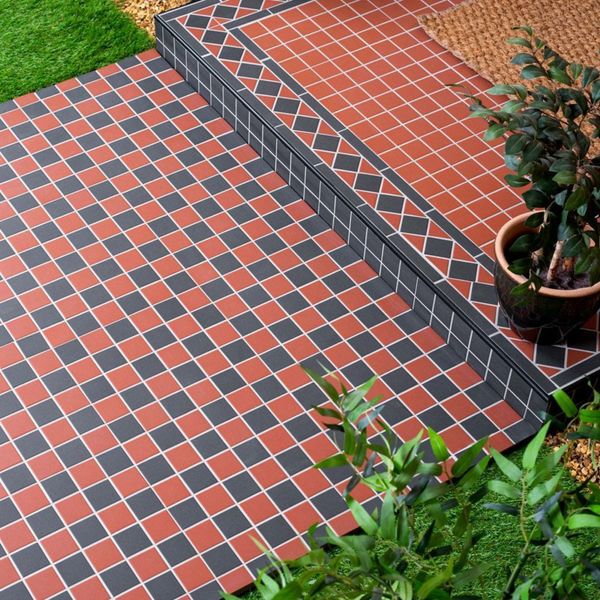
Victorian Mosaic Tiles – The classic choice for period properties, Victorian mosaic tiles create an authentic entrance that reflects the character of the home. Traditional geometric patterns in black and white or red and black are timeless and elegant. Modern porcelain versions come in mesh-backed sheets, making them easier to install and more durable than the original encaustic tiles. They also tie beautifully into the hallway for a seamless period look.
Explore the Victorian Mosaics category page for more inspiration, or read Victorian Mosaic Tiles for Hallways to see how this look can continue inside.
Chequerboard Pattern – A simpler alternative to full geometric mosaics, the chequerboard pattern uses black and white tiles laid in a diamond layout. This timeless design works equally well in period and modern homes, offering a crisp, classic look that never dates.
Stone-Effect Porcelain – For a natural, understated style, stone-effect porcelain tiles replicate the texture and tone of sandstone, slate or limestone. These tiles work particularly well on larger porches and blend effortlessly with garden paths or exterior paving, creating a cohesive outdoor aesthetic.
Plain Porcelain – For a clean, contemporary entrance, plain porcelain tiles in a single matt colour—such as grey, cream or anthracite—offer simplicity and sophistication. Their uniform finish provides a modern backdrop that complements minimalist architecture and modern door designs.
Encaustic-Effect Tiles – For a bolder statement, encaustic-effect tiles bring pattern and personality to a small space. Inspired by traditional cement tiles, they feature intricate motifs and Mediterranean-style designs that add warmth and individuality to the entrance.

Choosing the Right Size and Layout
Porches are often compact or irregularly shaped, so tile size and layout play a big role in achieving a balanced, professional finish.
For small porches under 2 sqm, smaller tiles or mosaic sheets are the most practical choice. They require less cutting, follow the contours of the space more easily, and maintain good visual proportion. Large-format tiles can overwhelm a small area and lead to excessive waste from trimming.
In larger porches, bigger tiles such as 600x600mm create a cleaner, more open look. With fewer grout lines, the surface appears more seamless and is easier to maintain.
For stepped porches, tiles should wrap neatly over the step nosings for a safe, finished edge. Many tile ranges include matching bullnose or step tiles designed specifically for this purpose, ensuring both durability and a cohesive appearance.
When the porch connects directly to a tiled hallway, using the same tile—or a complementary tile from the same range—creates a seamless flow between inside and out. This continuity enhances the sense of space and ties the entrance together visually.
Before fixing, always dry-lay the tiles to check the pattern, alignment and any potential cuts. This step helps minimise awkward edges and ensures the final layout looks balanced, especially in small or irregular-shaped porches.

Installation Considerations for Porches
Proper installation is key to ensuring porch tiles perform well and last for years. Because porches are exposed to the elements and often feature steps or thresholds, attention to detail during fitting makes all the difference.
Drainage: A porch floor should have a very slight fall (gradient) away from the front door so that rainwater drains outward rather than pooling near the entrance. This gradient should be built into the substrate by the tiler before the tiles are laid.
Adhesive: Always use a flexible, frost-resistant adhesive rated for external use. Standard indoor adhesives can crack or fail in freezing temperatures, leading to loose tiles or water ingress.
Grouting: A flexible, frost-resistant grout is equally important for exposed porches. It prevents cracking as temperatures fluctuate and helps maintain a watertight surface. Grout colour can either match the tile for a seamless look or contrast to highlight the pattern.
Professional Fitting: Although porches are small, they can be complex to tile due to step edges, thresholds and drainage gradients. A professional installation ensures the correct fall, alignment and finish.
Learn more about expert fitting options on the Stoke Tiles fitting service page.

Frequently Asked Questions About Porch Tiles
What tiles are best for a front porch?
The best tiles for a front porch are porcelain tiles rated for external use. They are frost-resistant, durable, and available in a wide range of finishes and styles. Porcelain’s low water absorption makes it ideal for outdoor conditions, ensuring it won’t crack or fade over time. Look for tiles with a slip rating of R10 or R11 for safety in wet weather.
How do you tile a small porch floor?
For small porches under 2 sqm, use smaller tiles or mosaic sheets to maintain proportion and reduce cutting. Dry-lay the tiles before fixing to check the layout and minimise awkward cuts. A professional tiler can ensure correct gradients for drainage and neat edges around steps or thresholds. Learn more about expert fitting options on the Stoke Tiles fitting service page.
Are porch tiles slippery when wet?
Opt for matt or textured tiles with a slip rating of R10 or higher. Avoid polished finishes, as they can become slippy in wet conditions.
Can you paint porch tiles?
Painting porch tiles is not recommended. Paint can wear away quickly under foot traffic and exposure to the elements, reducing slip resistance and durability. For a refreshed look, consider replacing old tiles with modern porcelain options that mimic stone, cement, or encaustic designs.
How do you clean porch tiles?
Porcelain porch tiles are low-maintenance and easy to clean. Sweep regularly to remove dirt and debris, then mop with warm water and a mild detergent. Avoid harsh chemicals or wax-based cleaners, as they can leave residues.
For more advice or to explore suitable options, visit Stoke Tiles to browse outdoor-rated porcelain collections and order free samples for your porch project.