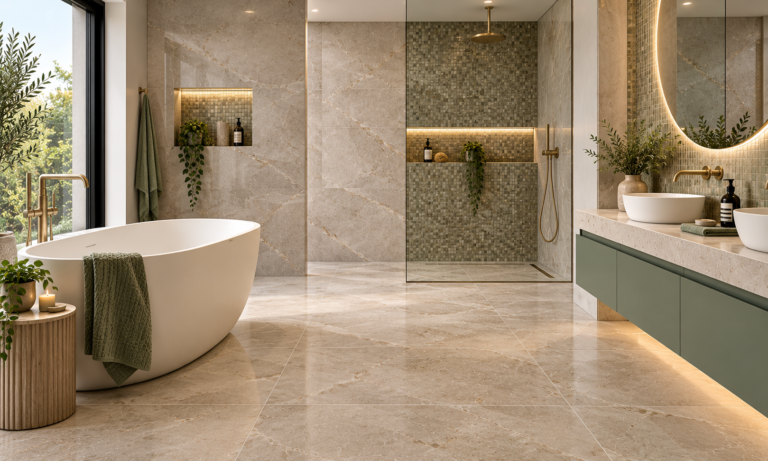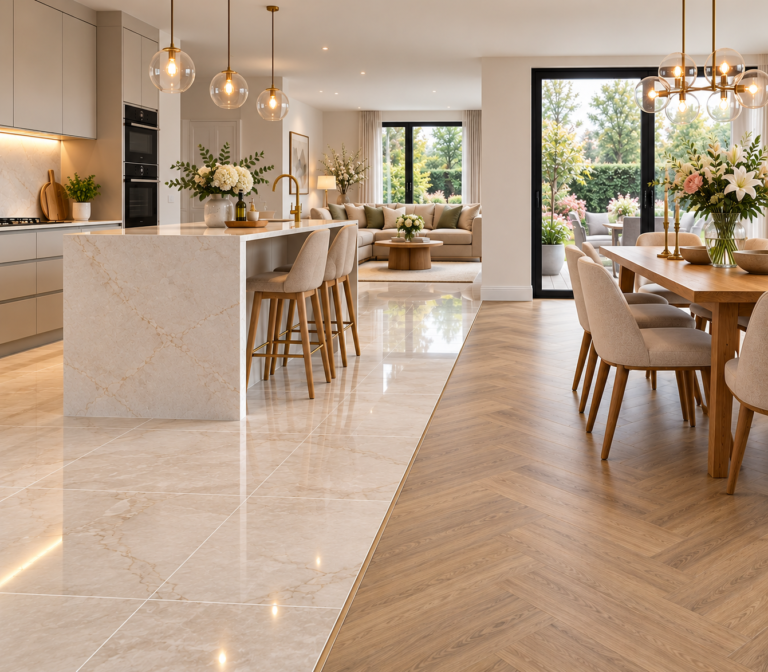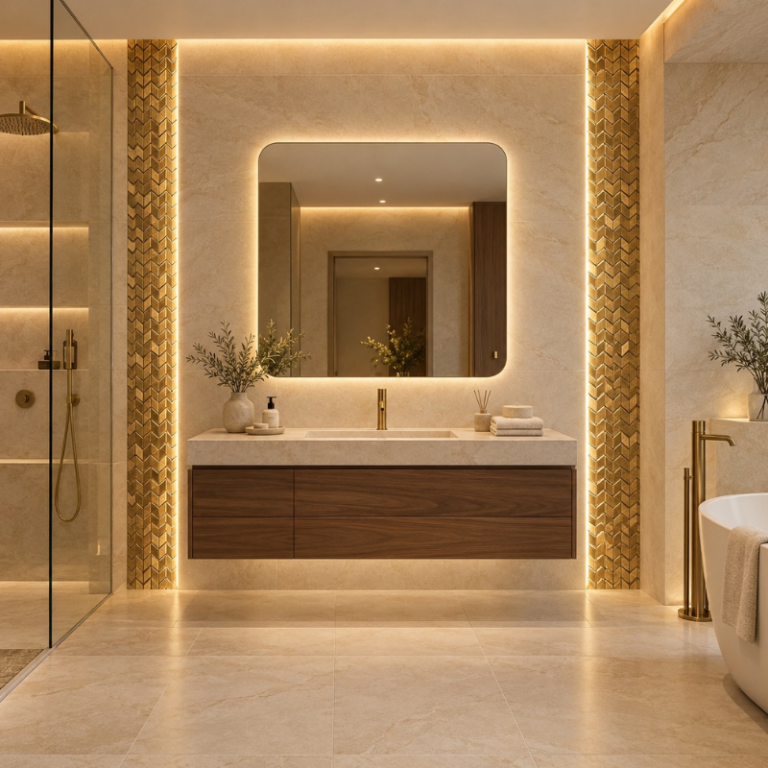


Natural stone floors and walls have an appeal that never goes out of style — the warmth of sandstone, the drama of slate, the elegance of marble, and the rustic charm of travertine. But as beautiful as real stone is, it also comes with real upkeep: sealing, staining, etching, and higher maintenance costs. Stone-effect porcelain tiles offer the same natural look and visual depth, without those drawbacks. Thanks to advanced digital printing and surface texturing, today’s porcelain stone effects are remarkably convincing — so much so that even up close, many are difficult to distinguish from the real thing.

Stone Effect vs Real Stone – The Key Differences
When comparing stone effect porcelain tiles vs real stone tiles, the biggest difference is maintenance. Natural stone tiles are porous, so they need sealing before installation and regular re-sealing over time to help protect them from moisture and staining. In contrast, stone effect porcelain tiles are non-porous, easy to clean — making them a much lower-maintenance choice for everyday use.
There are also differences in cost, consistency and practicality. Real stone is usually more expensive per square metre and can vary naturally from slab to slab, while porcelain offers a more predictable finish with controlled variation across the batch. Stone effect porcelain is also stain-resistant, easier to install, and well suited to underfloor heating, which is why many homeowners choose it as a practical alternative to natural stone
In summary, real stone has a depth and character that comes from being a genuinely natural material. Stone-effect porcelain replicates the look convincingly but it is not identical. For most homeowners, the practical benefits of porcelain outweigh the marginal difference in authenticity.

Stone Effect Tile Types – A Guide to Each Look
Slate effect tiles offer a dark, dramatic finish with a layered, textured look that closely resembles natural slate. Popular in hallways, kitchens and outdoor areas, they are available in charcoal, anthracite, grey and multi-tonal finishes.
Sandstone effect tiles bring a warm, rustic feel that works beautifully in country kitchens, farmhouse-style interiors and period properties. They are commonly available in buff, honey, grey and multi-blend tones.
Limestone effect tiles create a soft, elegant and understated look. This style of limestone-effect porcelain is ideal for bathrooms and living areas, and is often chosen in cream, beige, pale grey and warm white finishes.
Marble effect tiles offer luxurious veining and a refined high-gloss appearance. As one of the most popular porcelain tile categories in the UK, marble-effect tiles in Calacatta, Carrara and Statuario styles work especially well in bathrooms, hallways and feature walls.
Travertine effect tiles bring a warm, textured Mediterranean feel, with a relaxed, natural look that suits both classic and contemporary interiors.

Where to Use Stone Effect Tiles
Stone effect tiles are a versatile choice for both classic and contemporary interiors, working well across a wide range of rooms and applications. In kitchens, stone-effect floor tiles add warmth and natural character, with slate effect tiles and sandstone effect tiles ideal for traditional spaces, while marble effect tiles and limestone effect tiles suit more modern kitchen designs. For some Kitchen Splashback ideas, discover our latest guide here.
In bathrooms, stone-effect tiles help create a calm, spa-like feel. A popular combination is marble-effect wall tiles with a contrasting stone-effect floor tile, giving the space a refined and balanced finish. In hallways, slate effect and sandstone effect tiles are especially practical, as they are hardwearing, forgiving in high-traffic areas, and effective at disguising everyday dirt and scuffs. Check out our handy guide helping you to choose the right hallway tiles here.
For living areas, large format stone effect floor tiles in limestone or marble effects can create a sophisticated, hotel-style look. They also work well in open-plan spaces where a seamless, elegant finish is important. In outdoor areas, many stone effect porcelain tiles are suitable for external use, offering the look of a natural stone patio without the moss, algae and weathering issues often associated with real stone.

Choosing the Right Finish and Format
When choosing stone effect tiles, the finish makes a big difference to the final look and feel. A matt finish is the most popular option for stone-effect porcelain because it closely replicates the natural, unpolished surface of real stone.
For a more luxurious look, polished or gloss marble-effect tiles can add shine and elegance. These are especially popular in bathrooms and hallways, but they do need a little more care to keep them looking streak-free. Textured stone effect tiles are another excellent option, with surface detail that mimics the riven look of slate or the pitted texture of travertine while also improving slip resistance.
Format is just as important as finish. Large format stone effect tiles, particularly sizes from 600x600mm upwards, tend to look more convincing because they allow the natural pattern to flow across a larger surface with fewer grout lines breaking it up. This creates a more seamless, realistic stone look. Grout colour also matters: a matching grout helps the tiles blend together, while a contrasting grout draws attention to the grid and can reduce the natural stone effect.

Conclusion
Stone-effect porcelain tiles let you enjoy the warmth, character and visual impact of natural stone without the sealing, staining and ongoing maintenance. Whether you want the drama of slate, the elegance of marble, the warmth of sandstone or the understated refinement of limestone, modern stone-effect tiles deliver a convincing natural look in a format that is easier to install, easier to maintain and significantly more affordable than the real thing.

Frequently Asked Questions
Are stone effect tiles any good?
Yes, stone effect tiles are an excellent choice if you want the natural look of stone with the benefits of porcelain tiles. They are durable, low maintenance, easy to clean and suitable for use throughout the home, making them a practical alternative to natural stone.
Do stone effect tiles need sealing?
No, stone effect porcelain tiles do not need sealing. Because porcelain is non-porous, it does not absorb water or stains in the same way as natural stone, which makes it much easier to care for and ideal for busy households.
What is the difference between porcelain and stone tiles?
The main difference between porcelain tiles and natural stone tiles is that porcelain is manufactured for consistency, strength and low maintenance, while natural stone is a natural material that can vary in appearance and usually requires sealing and more regular care.
Can you use stone effect tiles outside?
Yes, many stone effect outdoor tiles are suitable for external use, including patios, paths and garden areas. When chosen in the correct thickness and slip rating, stone effect porcelain paving offers the look of natural stone without the weathering, moss or algae issues.
Are stone effect tiles slippery?
Stone effect tiles are available in a range of finishes, including anti-slip tiles for bathrooms, kitchens, hallways and outdoor areas. A matt or textured finish can improve grip while still giving you a realistic stone look.
How do you clean stone effect tiles?
Stone effect tiles are easy to clean with regular sweeping and mopping using warm water and a mild floor cleaner. As low-maintenance porcelain tiles, they do not need specialist sealing or intensive upkeep, which makes them a popular choice for everyday use.